Author: Kayode Olaitan

  • NEWS ANALYSIS: Renewing hope for Persons with Disabilities (PwDs)

    Renewing hope for Persons with Disabilities (PwDs)

    A News Analysis by Ahmed Ubandoma, News Agency of Nigeria (NAN)

    10 Pragmatic Ways to Overcome Disability Barriers-EnableMeCentre for Citizens with Disabilities is a non-governmental organisation that has, on many occasions, raised concerns about the population of Persons with Disabilities (PwDs) in the country.

    The argument of the organisation has been that without an accurate figure on PwDs, it will be difficult to make adequate plans for their wellness.

    It alleges that the 2006 Nigerian census recorded 3.2 million people as living with disabilities, or 2.32 per cent of the total population of 140 million people in that year which, according to it is inaccurate.

    It then enjoined the National Population Commission to cooperate with the Ministry of Women Affairs and Social Development for a fair capturing of the PwDs in future census.

    Concerned persons living with disabilities have also observed that the ratified United Nations Convention on the Rights of Persons with Disabilities of 2007 and its Optional Protocol in 2010 have no any impacts on the management of PwDs across the country.

    According to them, the Ministry of Women Affairs and Social Development, charged with submitting reports on progress might not have been doing so, thus limiting the understanding of disability to a treatise of welfare and charity, resulting in total neglect of the several rights of the PwDs.

    For instance, Mr James David Lalu, the pioneer Executive Secretary of the National Commission for Persons with Disabilities, explains that it takes 20 years struggle to recognise the rights of Persons with Disabilities (PWD) in the country.

    “There are a lot of things to put in place in a particular building before you can achieve an effective accessibility. One of the efforts we are making is to create a programme to bring together experts on accessibility, within and outside the country’’, he explains.

    Similarly,Mr Abdullahi Usman, President, Joint National Association of Persons with Disabilities notes that many PwDs live in abject poverty “and if you go to some parts of the country, they engaged in street begging because they are not educated enough to know the dangers of it.

    “Our members needs skills acquisition training if the Federal Government can help us to admit our members into skills centres to acquire different skills, we will appreciate that’’.

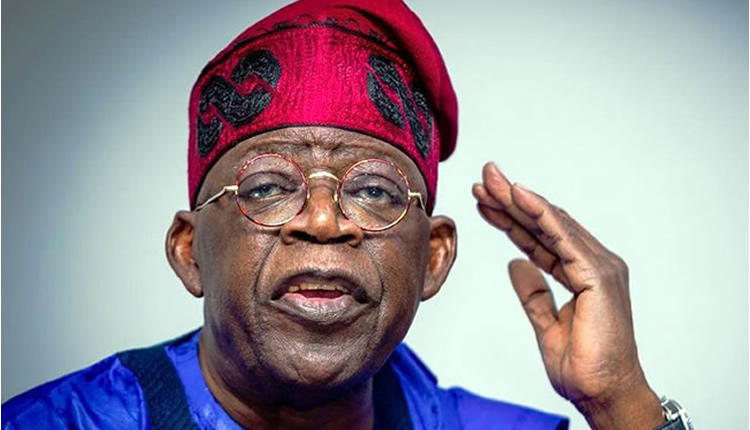
    Concerned by this condition of the people living with disabilities, President Bola Tinubu’s administration through the Ministry of Humanitarian Affairs and Poverty Alleviation, announced a new policy direction under the Renewed Hope Agenda that in every social intervention programme undertaken by government, 10 per cent of such would be reserved for PwDs.

    Suspended Minister of Humanitarian Affairs Betta Edu who announced the new policy while inaugurating various empowerment programmes for persons with disabilities in Abuja, said that the President directed that the disability community should be given priority in all intervention programmes of government.

    “Already, we are into conditional cash transfers for 15 million households; out of this figure, 10 per cent is reserved for the disability.

    “So, we are happy and very proud of the disability commission for pushing on all fronts to ensure that the Renewed Hope Agenda is actually achieved,’’ she noted.

    “We are providing Point Of Sales (POS) machines to persons with disability across the country so that they can be the last mile distributors of the funds to people living in villages and hard-to-reach areas.

    “We also gave N130, 000 each, as scholarship to some physically challenged students in tertiary institutions.

    “Beyond this, we have also been able to bring officials of the Corporate Affairs Commission to carry out proper registration of their businesses and N20 million has been released for that purpose.

    “We are having several other interventions such as giving out grants to associations linked to persons with disabilities,” she said.

    Edu said that the Federal Government would be committed to supporting the educational needs of citizens, persons with disabilities inclusive.

    She also said that the ministry would collaborate with the Ministries of Finance, Ministry of Health and Ministry of Education, among others, to eradicate poverty in the country.

    “Some people are poor because they do not have access to education while others are poor because they do not have access to quality healthcare services or are poor because they do not have access to jobs,’’ she observed.

    She said that the ministry had been given a full department to coordinate the overall national responses on issues relating to affecting persons with disabilities in the country.

    Sharing similar sentiments, Mr Abdullahi Usman, President, Joint National Association of Persons with Disabilities, therefore, commended the president for the gesture and for rectifying the African Charter on Human Rights and the rights of persons with disabilities in the country.

    Usman, however, decried the slow level of implementation of the presidential directive which he said that only half of his members had so far benefited from the intervention programme.

    “First, we must appreciate the government of Tinubu with the Renewed Hope Agenda and for his wonderful job of ensuring that there is equal opportunity for all citizens.

    “All we are asking for is to have equal opportunity where inclusive society will be guaranteed because nothing about us is without us’’ Usman pleaded.

    Ms Chisom Onyekwere, one of the beneficiaries of the Renewed Hope intervention programme that got POS machine, also expressed gratitude for the gesture.

    “I am a living witness of the Renewed Hope intervention programme and for me, the president has made impact in this one year of his government because I was given POS machine and a token of N100,000 to startup my business through the Ministry of Humanitarian Affairs,’’ she said.

    Mr Halilu Gayam, Chairman, Nasarawa State Association of the Deaf, however said that his members had yet to feel the impact of the Renewed Hope intervention programme.

    “We in Nasarawa State have yet to feel the impact of president’s intervention but we use to see in television as other states benefit and we hope our turn will come.

    “Majority of our members in Nasarawa State are well educated because we have special needs school and the areas we would need Federal Government support is job opportunities,’’ he said.

    Also, Ms Brisca Aaron, Executive Secretary, Bauchi State Agency for Persons with Disabilities, said that the state had benefited from the Federal Government’s intervention programmes.

    “The policy has been implemented in Bauchi State because the state is benefiting from the relief materials and other social interventions of the Federal Government to persons with disabilities under the Ministry of Humanitarian Affairs.

    “Bauch is the first in the North-East region of the country to domesticate the discrimination against Persons with Disabilities Law and we have strong synergy with the Federal Government in promoting disability inclusive projects, especially as it relates to their education, health and social wellbeing,’’ she said.

    Observers, nonetheless, believe that Tinubu means his promise on the Renewed Hope Agenda when he said that it would leverage the nation’s population and resources with main focus on unleashing the nation’s full economic potential.(NANFeature)(nannews.ng)

    **If used please credit the writer and News Agency of Nigeria (NAN)

  • FEATURE: Breaking barriers to stardom amid challenges in music industry

    Breaking barriers to stardom amid challenges in music industry

    By Folasade Adeniran, News Agency of Nigeria (NAN)

    Hand Drawn Musical Instruments Images – Browse 212,003 Stock Photos, Vectors, and Video | Adobe Stock

    Debutante musicians believe that although many aspiring musicians are putting a lot of effort to make a name in the music scene, there are challenges ranging from payola, copyright infringement and privacy.

    Lack of funding and infrastructure, talent development and grooming, limited royalty and distribution systems are their major headache, according to them.

    In spite of lack of funding, payola — the illegal practice of paying a commercial radio station to play a song without the station disclosing the payment – has had a serious drag on many talents.

    Music enthusiasts observe that Nigeria is home to a thriving and diverse music industry that has given birth to some of the most significant musicians in Africa.

    They note that Nigerian music has a rich cultural legacy that has enthralled both domestic and foreign listeners, ranging from Afrobeat to highlife.

    “Music industry possesses both the capacity to support millions of budding artistes and generate considerable revenue for the economy, but the industry is doing less,’’ they observe.

    However, some artistes state some other challenges they face in music industry, apart from these.

    For instance, Ebuka Hillary, a gospel minister popularly known as EbukaSongs, with international record label, Spotlite Nation, says that one of the things to be worked on in the industry, particularly the gospel industry, is the availability of genuine love for upcoming artistes.

    “When they see an artiste rising, it is time for everybody to put themselves together, put force together, and help that one to stand, instead of criticising and saying all sorts of things about the young ones who are still coming up,’’ he notes.

    Another music artiste, Lillian Iheonunekwu, by the stage name, Lilcassie, highlights some of the challenges she faced while advancing her musical career.

    “Not having to know someone who knows someone; not having the right contact is a problem. Promotion as an independent artiste is draining,’’ she observes.

    Other up-and-coming artistes also express their challenges in trying to bloom in the music industry.

    Omotola Omodanisi says: “The challenge of finance is sometimes overwhelming and the inconsistent availability of excellent team players is daunting.

    “There’s no well-defined support structure for the average upcoming artiste and excellent promotion process can’t be executed by minimal budget which makes the upcoming artiste unable to cater for these needs,’’

    A budding hip-hop artiste, Sola Chinedu, says it is difficult to get brands and label executives to discover artistes that are good at music creation.

    “I currently use streaming platforms to promote my music hoping for the best. Even the record labels that might finally get an upcoming artiste turn them into slaves,’’ she alleges.

    Chinedu said he has been tempted to give up so many times due to the strain, fear and disappointments but the love of music continues to push him.

    Arinze Nnamdi says his journey hasn’t been easy and that as an independent artiste, “you have to do basically everything by yourself.

    “We do not have a support system; you are the only one carrying out your dreams yourself. It hasn’t been easy but definitely I keep on pushing, till I definitely get there.

    “One of the basic challenges is funds, you don’t have a record label, you are doing everything yourself, nobody is supporting you.

    “So, if you do not have sponsors, it’s not going to be easy for you because you have to bring out money for this and that. It’s challenging and also getting people to listen to you.

    “Most people do not want to listen to your track, they underestimate upcoming artistes, they prefer to listen when you finally blow.

    “You are lucky, if you are from a rich background and you are able to fund yourself, but what of those from poor background?

    “If there are people that could help fund musical artistes, that will be helpful because right now, I don’t think the music industry is favourable to upcoming artistes,’’ he observes.

    Sharing similar sentiments, Ifechukwu Raymond also known as Raymid, an up-and-coming singer and rapper, says nobody is ready to support or even listen to budding artistes.

    “That’s why young artistes tend to give up when their efforts are in vain. It’s only grace and connection that work sometimes for a person,’’ he says.

    The artiste says that apart from support from music professionals and experts, people do not listen to up-and-coming artistes.

    “It’s just families and friends that listen to you and that cannot be your audience for a long time. So, the struggle to get people to listen to you is tasking.

    “That is why some upcoming artistes think that hiring video vixens and displaying ostentatious lifestyles will draw audiences but does it work all the time?”

    Raymond also pleaded with talent hunts and organisers of music competitions to be fair in their judgment.

    “Give it to those who deserve it. There’s no need to play politics. Support true talent and throw them into the limelight,’’ he pleaded.

    Esther Okechukwu has had an unfortunate share in trying to survive in the musical industry as she claims that: “My friend introduced me to a producer and I showed him my musical composition, hoping that he could bring it to life. After seven days of working with him, I was unable to reach the producer.

    “I later found out that another artiste had used my song, only that some alterations were made. It was painful.’’

    Okechukwu also said that lack of knowledge and guidance for budding artistes have been eliminating talents from the industry.

    But the Chairman of Santabella Group and the parent company of Santabella Music Empire Ltd., Oladipupo Lawal, says international companies have a role to play in the gradual obscurity of artistes on the national and international scene.

    He says concerns over the future of local artistes have been raised by the aggressiveness and dominance of international enterprises.

    “One e-mail address serving the whole continent of Africa overloads the system, giving international companies an unfair advantage, and only artistes with connections to these corporations receive the much-needed editorial support, leaving others in obscurity.

    “This is the reality of the role of streaming platforms such as Apple Music, which purport to provide editorial support to artistes.

    “Significant negative effects result from this global invasion, including the decline in popularity of many local music icons and the general public lack of exposure to their works.

    “Marketing and promotion are among the areas of the sector that are affected by this change,’’ he observes.

    Lawal further states that songs that are trending on digital platforms are given priority over local content on radio stations, which used to be the main places to find new music.

    `Consequently, radio commercials are no longer as effective as they once were; this gives multinational corporations even more clout and denies many artistes a just opportunity to be heard,’’ he notes.

    Also, the General Manager of Megaelectrics, Deji Awokoya, says for artistes to advance, they must endure and remain true to their trade.

    “I wonder why young performers are chasing fame and fortune rather than honing their skill and establishing themselves in their local communities first,’’ he asks.

    “Having good music is what will stand them out of the crowd; the second is creating a community, which can be accomplished by consistently putting oneself out there.

    “Before leaving, they have to be well known on their streets. They ought to learn from Portable’s portrayal of the concept of being well known,’’ he suggests.

    Alextino Sunday, also known as, DJ Lextino, says the music industry is very wide and continuously growing every day with a lot of challenges and a few people trying to feed on new artistes claiming to help them.

    “The country alone is a huge challenge because nothing helps upcoming and independent Djs  like us in the industry and this highlights the reason why lot of talents are wasted’’ he says.

    Afropop singer, Ifeanyi Ifegwu, also known as Siino, says artistes and professionals in the music industry face major hurdles.

    He says many gifted people have financial difficulties when it comes to recording, producing, and promoting their work.

    “The general development of the industry is hampered by the lack of well-equipped recording studios, concert venues, and trustworthy distribution methods.

    “Opportunities for development and professionalisation can be obtained by promoting public and private investment, creating funds specifically for music, and enhancing infrastructure,’’ he notices.

    The afropop singer adds that talent development and nurturing are essential to the music industry’s long-term viability.

    “Artistes can enhance their abilities, broaden their creative vision, and negotiate the intricacies of the industry by having access to top-notch music education, mentorship programmes and talent development initiatives.

    “Working together, government agencies, business leaders, and academic institutions can build a nurturing environment that develops the next wave of Nigerian musicians,’’ he says.

    All in all, veteran artiste, Dare Art Alade, says it takes a community to raise a musician, insisting that: “Everybody coming together to support, give their time and helping that young artiste grow goes a long way in growing the creative industry.(NANFeatures)(www.nannews.ng)

    **If used, please, credit the writer as well as News Agency of Nigeria (NAN)

  • NEWS ANALYSIS: Assessing 2024-2027 Education Roadmap one year after

    Assessing 2024-2027 Education Roadmap one year after

    A News Analysis by Funmilayo Adeyemi, News Agency of Nigeria (NAN)

    Tinubu: My mission as President

    President Bola Tinubu on assumption into office on May 29, 2023 reiterated the commitment of his administration to education for human capital development in the country.

    Tinubu gave approval for a comprehensive set of policies aimed at overhauling Nigeria’s education sector which focused on four initiatives — Data Repository, Out-of-School Children, Teacher Training and Development and Skill Development and Acquisition.

    Educationists have recalled that as laudable as the roadmap suggests, the number of out-of-school children is currently a subject of controversy.

    The United Nations Children Fund (UNICEF) and the United Nations Education and Scientific Organisation (UNESCO) put the figure at 18.5 million and 20 million respectively but the government insists the figure is less.

    Irrespective of the controversy, Tinubu urged the Federal Ministry of Education and all stakeholders in the sector to work together to see this vision accomplished.

    The ministry began by developing a 2024-2027 Education Roadmap as well as the Ministerial Deliverables entitled “Education for Renewed Hope’’.

    The roadmap contains practical, problem-solving and realistic approaches across 13 thematic areas delineated to allow for concurrent implementation as parts of a synergistic whole.

    The roadmap underpins the ministerial deliverables, a compact signed between the management of the Federal Ministry of Education and the president for which the education ministry would be held accountable.

    The roadmap being developed has heavy concentration on the need to have out-of-school children reduced, with the target of increasing school enrolment, transition and completion for learners.

    The ministry, through the Adolescent Girls Initiative for Learning and Empowerment (AGILE) project, currently running in 18 states, has enrolled more than three million girls in secondary education.

    Also, through the project, more than 5,000 classrooms have been constructed with 84,567 teaching and learning materials provided to schools in the beneficiary states.

    Speaking in an interview, the National Project Coordinator of AGILE, Mrs Amina Haruna, said that AGILE, a World Bank assisted project, was aimed at improving secondary education opportunities for adolescent girls in 18 participating states.

    Haruna said that the project had also benefitted millions of students with life skills and digital skills.

    According to her, this project is aligned with the major focus of the ministry at the moment which is to strengthen education at the basic and secondary education level.

    She said that the project had not only brought academic programmes to the students but also included hands on skills to make the students self-reliant.

    “The boys are not left out as they also benefit from this project through our visibility in the mixed schools.

    “The only thing the boys are not enjoying in this project is the cash incentives, any other thing is enjoyed by both the boys and girls,’’ she said.

    Haruna said that the project had the components for looking at the challenges students faced in going to school such as proximity, WASH facilities and environment conducive for quality learning and teaching and also acquiring skills.

    “From all the components, we started with renovations, and we worked on what would give a good shape to the school and by the time girls start enrolling, they are fully accommodated.

    “Then, we look at infrastructure, bringing enough facilities that the children can use and also for their teachers.

    “A communication campaign is also provided to enlighten and talk to the parents, traditional rulers about the importance of education.

    “We are also looking at a session where we can teach them how to build their confidence and talk to them about the reproductive system so that they can understand what they should expect when they are growing up,’’ she said.

    She added that the project had provided the students with digital literacy and conditional cash transfer as a financial incentives given to beneficiaries and their caregivers to support their education.

    “During this mission, we have touched the lives of 3,143,497 people; we also have 1,664,170 girls benefiting from the direct intervention of this project.

    “We have 1,155,469 girls enrolled in junior and senior secondary school. There’s also a 69 per cent completion rate in senior secondary school.

    “We have renovated more than 5,238 junior secondary classrooms and 6,134 classrooms have been renovated for the senior secondary school.

    “There are more than 537 separate toilet facilities made for girls in senior secondary schools. In over all, we have touched about 13,663,478 community members,’’ Haruna said.

    She further said more than 568 schools were running digital literacy programmes, noting that a new component of the project called second chance had been introduced.

    According to her, each of the states has identified centres where each girl can have literacy and skills so that they will be independent and also contribute to the economy of the country.

    The national coordinator explained that with the success stories of the project, the number of out-of-school children would be reduced drastically by the end of this administration.

    Corroborating this, the Minister of Education, Prof. Tahir Mamman at a retreat on implementation of Ministerial Deliverables of the Education for Renewed Hope held in Akwa Ibom, emphasised the need to reduce the out-of-school number.

    Mamman said there was need to develop the teacher’s skills that would strengthen and prepare them to teach the children the identified skills needed for the 21st Century knowledge-driven economy.

    “Suffice it to say that it is an embarrassment that Nigeria is continually associated with the highest number of out-of-school children in the world.

    “I would not want to bother you with the number of out-of-school children in the country. We would be paying particular attention to this unacceptable phenomenon.

    “And in line with President Bola Tinubu’s commitment, we will work towards returning 15 million out-of-school children back to the classrooms by the year 2027.

    “We will re-invigorate our focus on basic education, including ensuring the harmonisation and coordination of resources and activities among all tiers of government and development partners.

    “We have, therefore, begun operationalising the establishment of the National Commission for Almajiri and Out-of-School Children and approved a policy on Early Child Care Development Education.

    “We have begun engagement with state governments on removing bottlenecks that negatively impacted their ability to optimally utilise the Universal Basic Education Funds,’’ he said.

    Mamman said that the state governments would fulfill jointly agreed counterpart obligations on efficient programme execution and achievement of results.

    He said that a national policy on senior secondary and re-entry guidelines for adolescent girls who dropped out of school prematurely had also been developed and adopted.

    He said tht the policy was to advance the government’s interventions of returning more Nigerian children back to school.

    “To do this, we are placing a high premium on foundational and basic education and strengthening integration of existing non-formal schools into formal education systems.

    “We are scaling-up adult literacy and non-formal education interventions, increasing opportunities for girl-child education and forging partnerships with all tiers of government as well as our development partners,’’ he said.

    The Federal Government has also put in place upgrading of schools across the country with the aim of providing environment conducive for learning and teaching.

    The Executive Secretary, National Senior Secondary Education Commission, Dr Iyela Ajayi, said that the upgrading of 50 selected senior secondary schools across the country had begun.

    Ajayi explained that federal government colleges are now undergoing renovations in order to give the schools a face lift.

    He added that President Bola Tinubu placed high priority in the development of the education sector, hence evident in the budget allocation to the sector in the 2024 Appropriation Act.

    “Upgrade of the 50 selected senior secondary schools across the nation, which was captured in the 2024 budget, is a clear testimony of this administration’s commitment to the development of senior secondary education on the country,’’ he said.

    In furtherance to this and in a renewed move to enhance sustainable growth in education, the Federal Government has also concluded plans to embark on 13 new infrastructure projects at the National Mass Literacy and Adult Education Commission (NMEC), Kano Centre, through Public/Private Partnership.

    The Minister of State for Education, Dr Yusuf Sununu, noted that this was to kick-start the proposed land-swap deal for the development of critical infrastructure in Kano.

    According to him, the public private partnership project would mark a turning point in literacy education of adults across the country.

    He regretted that it was unfortunate that Nigeria still had a significant number of adults who are either illiterate or have limited literacy skills.

    “This is another milestone as a progress in the ministry where we are having it with private public partnership and this is also in the eight point agenda of the President Bola Tinubu, ’’ he said.

    The minister said that the 13 new infrastructure projects would include semi-detached two and three bedroom bungalows, state-of-the-art classrooms, clinic, library, hostels, a lecture theatre and recreational facilities, among others that were hitherto lacking.

    It is obvious that the government is not resting on its oars to take the education sector out of the woods with all these laudable policies.

    Needless to say that with proper implementation, all these measures and policies put in place; the country will be on its way to belong to the committee of nations that boast of zero out-of-school children with a well-trained, skilled and equipped teaching staff members.(NANFeatures)(www.nannews.ng)

    **If used, please, credit the writer as well as News Agency of Nigeria (NAN)